
Introduction
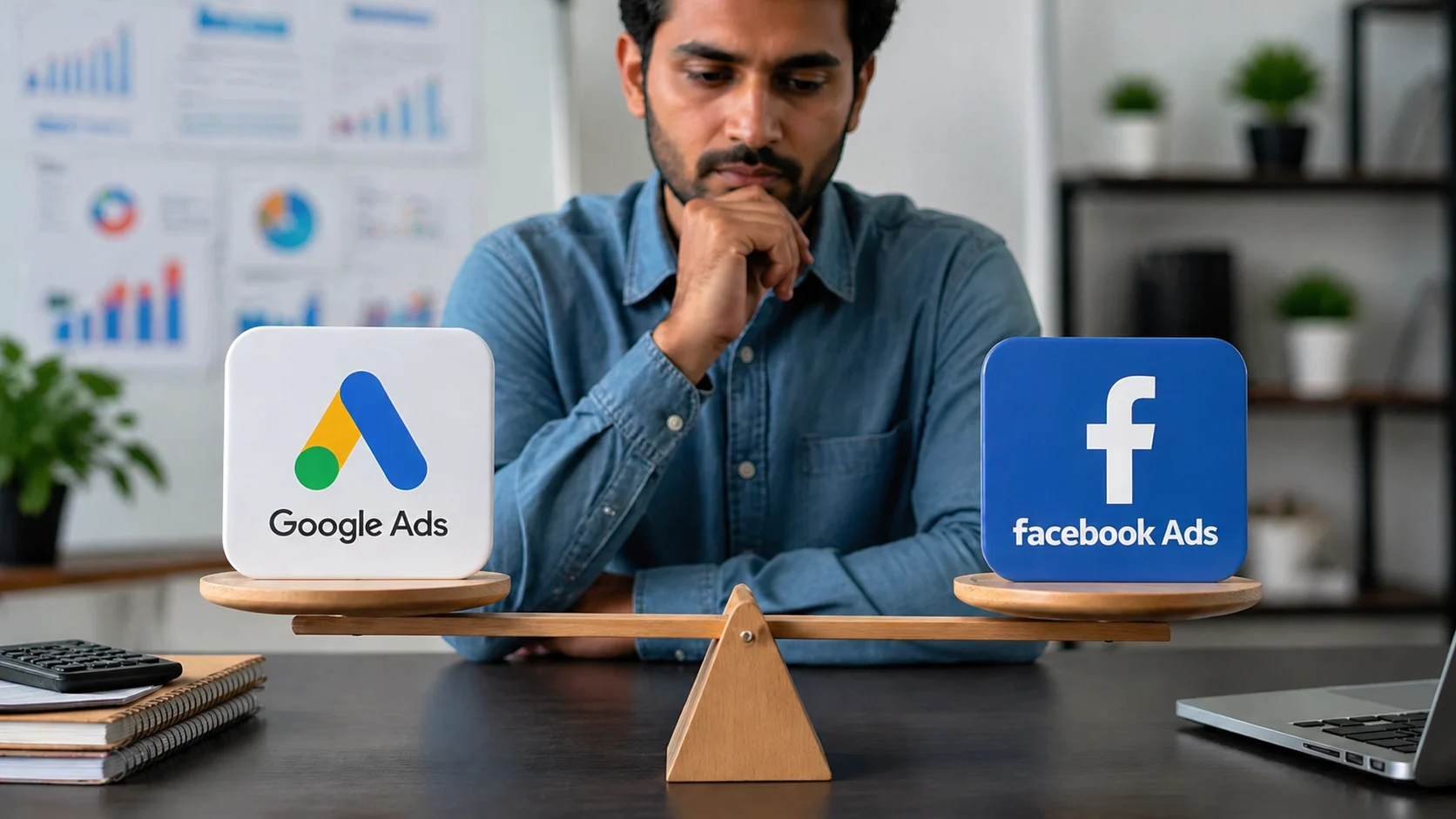
Google Ads vs Facebook Ads is one of the most common questions small businesses in India face when planning their digital marketing strategy. Both platforms provide powerful tools to reach potential customers, but they work differently, and choosing the right one depends on your business goals, target audience, and budget. Understanding the differences, advantages, and challenges of each can help you make an informed decision and generate better results.
Online advertising has become essential for businesses across India. With more people using smartphones and spending time online, businesses cannot rely solely on traditional marketing methods. Choosing between Google Ads and Facebook Ads allows companies to reach the right audience at the right time, but it’s important to understand how each platform functions and how it fits into your overall strategy.
Understanding Google Ads
Google Ads is a pay-per-click advertising platform where businesses display their ads on Google’s search results and its partner network. The main advantage of Google Ads is targeting users who are actively searching for products or services. For instance, if someone searches for “best home cleaning service in Mumbai,” a well-targeted Google Ads campaign ensures your business appears at the top of the results.
This search intent makes Google Ads ideal for generating leads and conversions. Small businesses in India use Google Ads to reach users who are ready to act, providing immediate traffic and inquiries. Beyond search ads, Google Ads also offers display advertising, YouTube video ads, and remarketing options that allow businesses to re-engage users who have previously interacted with their website.
However, Google Ads cost in India can vary depending on keywords, competition, and location. Businesses need to carefully plan their campaigns to ensure cost-effectiveness. By choosing the right keywords and structuring campaigns thoughtfully, even small budgets can deliver significant results.
Understanding Facebook Ads
Facebook Ads works differently from Google Ads. It focuses on audience interests, demographics, and behavior rather than search intent. Businesses can target users based on age, location, interests, and previous online activity, making it highly effective for engagement and brand awareness campaigns.
Small businesses in India use Facebook Ads to showcase products, run promotional campaigns, and engage with their audience through visually appealing content. Facebook Ads appear not only on Facebook but also on Instagram, Messenger, and the Audience Network, which expands reach across multiple platforms.
Unlike Google Ads, Facebook Ads excels in storytelling. Businesses can create interactive and visually engaging campaigns that encourage likes, shares, and comments. Retargeting options also allow advertisers to reconnect with users who have visited their website, improving conversion chances over time.
Facebook Ads cost in India tends to be more flexible than Google Ads. It uses a mix of cost-per-click (CPC) and cost-per-thousand impressions (CPM), allowing businesses to start small and scale gradually based on performance.
Comparing Google Ads vs Facebook Ads
The main difference between Google Ads vs Facebook Ads lies in user intent. Google Ads reaches people actively searching for specific products or services, while Facebook Ads reaches users based on interests and engagement behavior.
When it comes to costs, Google Ads can be more expensive for competitive industries, but it often delivers high-quality leads. Facebook Ads may have lower CPC, but the traffic may be less ready to convert compared to Google Ads. Audience engagement is another key factor—Facebook Ads allows more creativity and interaction, whereas Google Ads is focused on conversions.
Business type also plays a role in platform choice. Service-based businesses, such as plumbing, healthcare, or legal services, may benefit more from Google Ads. Product-based or lifestyle businesses may find Facebook Ads more effective for reaching new audiences and building brand recognition.
By analyzing these differences, businesses can choose the platform that aligns with their goals and ensures their advertising budget is used effectively. Learn more about performance marketing strategies here:
https://digitalimpacts.in/
Which Platform is Best for Small Businesses?
For small businesses in India, deciding between Google Ads vs Facebook Ads depends on objectives. If the primary goal is immediate leads or sales, Google Ads often delivers better results because it targets users with purchase intent. A local clinic, for example, can get inquiries directly through Google Ads when people search for healthcare services nearby.
On the other hand, Facebook Ads is better for creating awareness and building relationships with potential customers. Businesses selling fashion, beauty products, or online courses can use Facebook Ads to showcase their brand, engage users with posts or videos, and retarget audiences for better conversions.
Many small businesses combine both platforms to cover different stages of the customer journey. Google Ads can drive immediate inquiries, while Facebook Ads nurtures potential customers through engaging campaigns. This combined approach often results in more consistent lead generation and higher return on investment.
Budget Considerations for Google Ads vs Facebook Ads
Budget planning is crucial when deciding between Google Ads vs Facebook Ads India. Google Ads costs are primarily driven by keyword competition and campaign structure. Small businesses can start campaigns with a budget of ₹5,000 to ₹20,000 per month to test results. High-demand industries like real estate, finance, or technology may have higher CPC, but the investment often pays off through qualified leads.
Facebook Ads allows more flexibility in daily spending. Businesses can start with ₹500–₹1,000 per day, targeting specific demographics or interests. Since Facebook Ads reach is broader, businesses can generate awareness and engagement even with smaller budgets.
Cost efficiency depends on monitoring campaigns and adjusting strategies. Businesses that regularly analyze ad performance can reduce wasted spend and focus on the ads that provide real results. For more insights, you can also refer to
Google Ads Official Website.
Tips for Running Successful Campaigns
Running successful campaigns requires planning, monitoring, and adjustment. For Google Ads, focus on keyword relevance, ad copy quality, and targeted landing pages. Avoid spreading budgets thin across too many keywords before testing their performance.
For Facebook Ads, defining your audience is critical. Use visuals, videos, and engaging content to attract attention. Test different ad formats and analyze engagement and conversion metrics. Small businesses benefit from starting small, testing campaigns, and scaling successful ads gradually.
Both platforms provide analytics tools. Using these tools to track clicks, impressions, conversions, and ROI helps businesses understand which platform works best and how to improve results. You can also explore
Facebook Ads Manager
to understand campaign setup and optimization.
Avoiding Common Mistakes
Many small businesses make mistakes when running Google Ads vs Facebook Ads campaigns. One common error is neglecting performance monitoring, which can lead to wasted budget. Another is using overly broad targeting, reducing ad relevance.
Other mistakes include using poor landing pages, ignoring analytics data, and not retargeting potential customers. Avoiding these errors ensures that campaigns are cost-effective and generate measurable results. Consistency, analysis, and testing are key to long-term success.
Combining Google Ads and Facebook Ads
A combined strategy using Google Ads vs Facebook Ads can help businesses cover the entire customer journey. Google Ads captures high-intent leads, while Facebook Ads nurtures and engages potential customers through social media interactions.
For instance, an online store can use Google Ads to target users searching for products and Facebook Ads to showcase discounts, promotions, or new arrivals to a broader audience. This approach ensures consistent visibility and increases the chances of generating leads and conversions.
Businesses that use both platforms effectively can balance immediate lead generation with long-term brand building. The combined data from both platforms also helps refine targeting strategies and improve overall campaign performance. You can also explore our services here:
https://digitalimpacts.in/
Conclusion
Choosing between Google Ads vs Facebook Ads India depends on your business type, goals, and budget. Google Ads works best for high-intent searches and direct lead generation, while Facebook Ads is ideal for engagement, awareness, and visual campaigns.
Small businesses often see the best results by combining both platforms strategically. Careful planning, ongoing monitoring, and gradual scaling ensure that campaigns remain cost-effective and deliver measurable results. By understanding the differences and strengths of Google Ads vs Facebook Ads, businesses in India can make informed decisions that drive growth and improve ROI.