
Introduction
Google Ads lead generation is one of the most effective ways businesses can attract potential customers online. Every day millions of people search on Google for products, services, and solutions to their problems. When businesses place advertisements in these search results, they get the chance to connect with people who are already interested in what they offer.
For many companies, especially service providers and small businesses, the goal of advertising is not just traffic but actual inquiries from potential customers. These inquiries are known as leads. A lead can be a phone call, a form submission, a booking request, or any action that shows a person is interested in the service.
This guide explains how businesses can use paid search advertising to collect leads, how campaigns should be structured, and what factors influence results.
What Lead Generation Means in Online Advertising
Google Ads lead generation refers to the process of using paid advertisements to encourage potential customers to contact a business. Instead of only driving website traffic, the goal is to motivate visitors to take an action that signals interest.
In digital marketing, a lead usually happens when someone shares their contact details or requests information about a service. Businesses collect these leads so they can follow up with potential customers.
Common lead actions include:
- filling out a contact form
- requesting a quote
- calling the business directly
- booking an appointment
When campaigns are planned carefully, each advertisement becomes an opportunity to connect with people who are actively searching for solutions.
How Google Ads Connects Businesses With Potential Customers
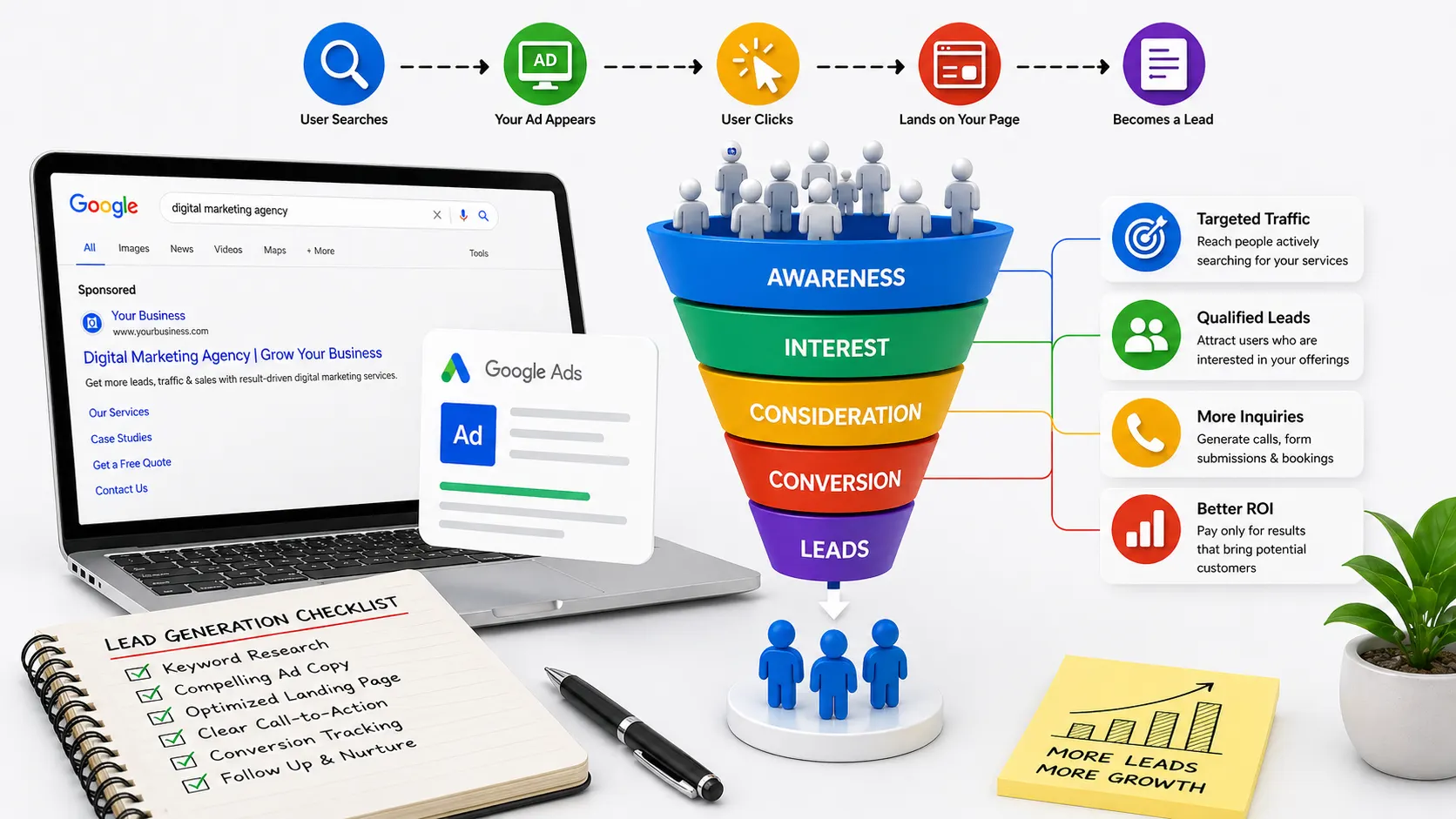
Google Ads lead generation works because the platform places advertisements directly in front of users who are searching for specific services. Instead of interrupting people with random advertisements, paid search focuses on matching ads with user intent.
When someone types a search query such as “home cleaning service near me” or “digital marketing agency,” Google displays advertisements related to those searches. Businesses that bid on those keywords can appear at the top of the search results.
This system benefits both users and advertisers. Users find services quickly, while businesses reach people who are already interested in what they offer. Because advertisements appear at the exact moment people are searching, the chances of receiving inquiries increase.
Another advantage is the pay-per-click model. Businesses only pay when someone clicks on the advertisement and visits the website. This means marketing budgets are spent on people who actually show interest. Businesses can also improve visibility with Google Ads services.
Understanding the Customer Journey Before Someone Becomes a Lead
Google Ads lead generation works best when businesses understand the typical journey customers take before contacting a company. Most people do not immediately become leads the moment they see an advertisement.
The process usually begins with a search for information. A person may start by researching solutions or comparing different services. During this stage, they often visit several websites and read about available options.
Once they feel confident about their choices, they move closer to contacting a business. At this point they may search for more specific phrases such as “best service provider near me” or “book consultation.”
Businesses that advertise during these moments have a better chance of receiving inquiries. Understanding this journey helps companies create campaigns that match the different stages of customer decision making.
Choosing Keywords That Bring Potential Customers
Google Ads lead generation heavily depends on selecting the right keywords. Keywords determine when advertisements appear in search results, so they must match what potential customers are looking for.
A business should focus on search terms that show clear intent. For example, someone searching for “plumber near me” or “website design service price” is more likely to contact a business than someone searching for general information.
Location-based keywords are also important for local services. Adding city names or phrases like “near me” helps advertisements reach people within the service area.
Longer search phrases often produce better results as well. These phrases usually describe a specific need, which means the person searching is closer to becoming a lead.
By researching and selecting relevant keywords, businesses can ensure their advertisements appear for searches that have real potential.
Writing Advertisements That Encourage Action
Another important part of Google Ads lead generation is creating advertisements that attract attention and encourage people to click. Even when ads appear in search results, users will only click if the message looks relevant and trustworthy.
A good advertisement usually includes a clear headline that directly matches the user’s search. When people see familiar words from their query in the ad, they are more likely to consider it helpful.
Ad descriptions should explain the service and highlight why someone should contact the business. Instead of using complicated language, it is better to keep the message simple and direct.
Calls to action also play an important role. Phrases such as “get a quote,” “book consultation,” or “call today” encourage users to take the next step.
Testing different ad variations can also reveal which messages attract more clicks and inquiries.
Creating Landing Pages That Turn Visitors Into Leads
Google Ads lead generation does not end when someone clicks an advertisement. After clicking, visitors arrive on a landing page, and this page determines whether they become leads.
A landing page should clearly explain the service and guide visitors toward taking action. When information is easy to understand and contact options are visible, visitors feel more comfortable reaching out.
A well-designed landing page usually includes a short description of the service, benefits for the customer, and clear contact options. These options may include a phone number, inquiry form, or booking button.
Loading speed also matters. If a page takes too long to open, visitors may leave before reading the content.
The overall goal is to make it simple for visitors to contact the business without confusion or unnecessary steps. Businesses investing in website design services often create better landing page experiences.
Using Ad Extensions to Encourage More Inquiries
Google Ads lead generation can improve further when businesses use additional ad features known as extensions. These features provide extra information within the advertisement itself.
Call extensions allow users to dial the business directly from the search result. This is especially useful for service providers who receive many inquiries through phone calls.
Sitelink extensions display additional links below the advertisement. These links can direct visitors to pages such as service details, pricing information, or contact pages.
Location extensions are helpful for businesses with physical offices because they show the business address directly in the advertisement.
These features increase the visibility of the ad and give users more ways to contact the company.
Tracking Leads and Measuring Campaign Results
Google Ads lead generation becomes more effective when businesses measure results carefully. Tracking allows companies to understand which advertisements and keywords bring the most inquiries.
Conversion tracking is the process of recording actions that represent leads. This may include phone calls, form submissions, or booking confirmations.
By analyzing campaign data, businesses can calculate the cost per lead and determine which campaigns provide the best value. This information helps improve future advertising decisions.
Regular monitoring also allows advertisers to pause underperforming keywords and focus on those generating real results.
Over time, these adjustments can improve campaign efficiency and lead quality.
Common Mistakes Businesses Make in Lead Campaigns
Even though Google Ads lead generation can produce strong results, some businesses struggle because of avoidable mistakes.
One common problem is targeting keywords that are too broad. These keywords may attract many clicks but not necessarily people who want the service.
Another mistake is sending visitors to a general homepage instead of a focused landing page. When users cannot quickly find the information they need, they often leave without contacting the business.
Some businesses also forget to track conversions, making it difficult to measure whether advertisements are producing real leads.
Budget management can also become an issue when campaigns run without regular monitoring. Without reviewing results, businesses may spend money on advertisements that do not generate inquiries.
Improving Lead Quality Over Time
Successful Google Ads lead generation requires continuous improvement rather than a one-time setup. Businesses that regularly review campaign performance can gradually increase the quality of their leads.
Testing different advertisement messages is one useful approach. Sometimes small changes in wording can make advertisements more appealing to potential customers.
Adjusting keyword targeting can also improve results. By focusing on search terms that show strong intent, businesses can reduce wasted clicks and attract more serious inquiries.
Reviewing landing pages is another helpful step. Clear information, visible contact options, and faster page loading can all increase conversion rates.
Over time, these adjustments help create campaigns that consistently bring valuable leads. Businesses can also strengthen campaigns with performance marketing services.
Building a Long-Term Strategy for Lead Generation
Google Ads lead generation works best when businesses treat it as part of a broader marketing strategy. Paid search campaigns can generate immediate visibility, but long-term success often comes from consistent planning and improvement.
Businesses should regularly analyze campaign data, review keyword performance, and adjust budgets based on results. Understanding which services generate the most inquiries can also help guide advertising decisions.
Combining advertising with strong website content and customer service can also improve overall results. When potential customers find clear information and receive quick responses, they are more likely to become paying clients.
Over time, advertising campaigns can become a reliable source of leads for many types of businesses.
For official advertising guidelines and best practices, visit Google Ads Help Center.
Conclusion
Google Ads lead generation provides businesses with a direct way to connect with potential customers who are actively searching for services. By placing advertisements in relevant search results, companies can reach people at the exact moment they need solutions.
Successful campaigns depend on several important elements including keyword research, well written advertisements, and effective landing pages. When these elements work together, advertising can generate consistent inquiries and business opportunities.
Businesses that monitor campaign performance and continue improving their strategy often see the best results. With careful planning and regular analysis, online advertising can become a dependable source of leads and long-term growth.