
Introduction
Google Ads landing page is the key element that can make or break your paid advertising campaigns. No matter how much effort you put into targeting, bidding, or writing ad copy, if your landing page doesn’t convert visitors, your ad spend is wasted. A well-crafted landing page ensures that traffic coming from your ads is guided towards a specific action, whether that’s making a purchase, filling out a form, or signing up for a newsletter. In this guide, we’ll explore what makes a landing page effective, the elements that drive conversions, common mistakes to avoid, and how to continuously improve your page to get the best results from Google Ads campaigns.
Why a Landing Page Matters for Paid Ads
A Google Ads landing page serves as the destination for your paid clicks. Unlike a regular website page, which might contain multiple links and distractions, a landing page focuses on one goal: converting visitors. Ads generate clicks, but only a landing page designed with intent and clarity can convert those clicks into meaningful actions. A poorly designed page may confuse visitors, increase bounce rates, and reduce your campaign’s overall performance. That’s why understanding what a Google Ads landing page needs to include is crucial for every advertiser.
Essential Elements of a High-Performing Landing Page
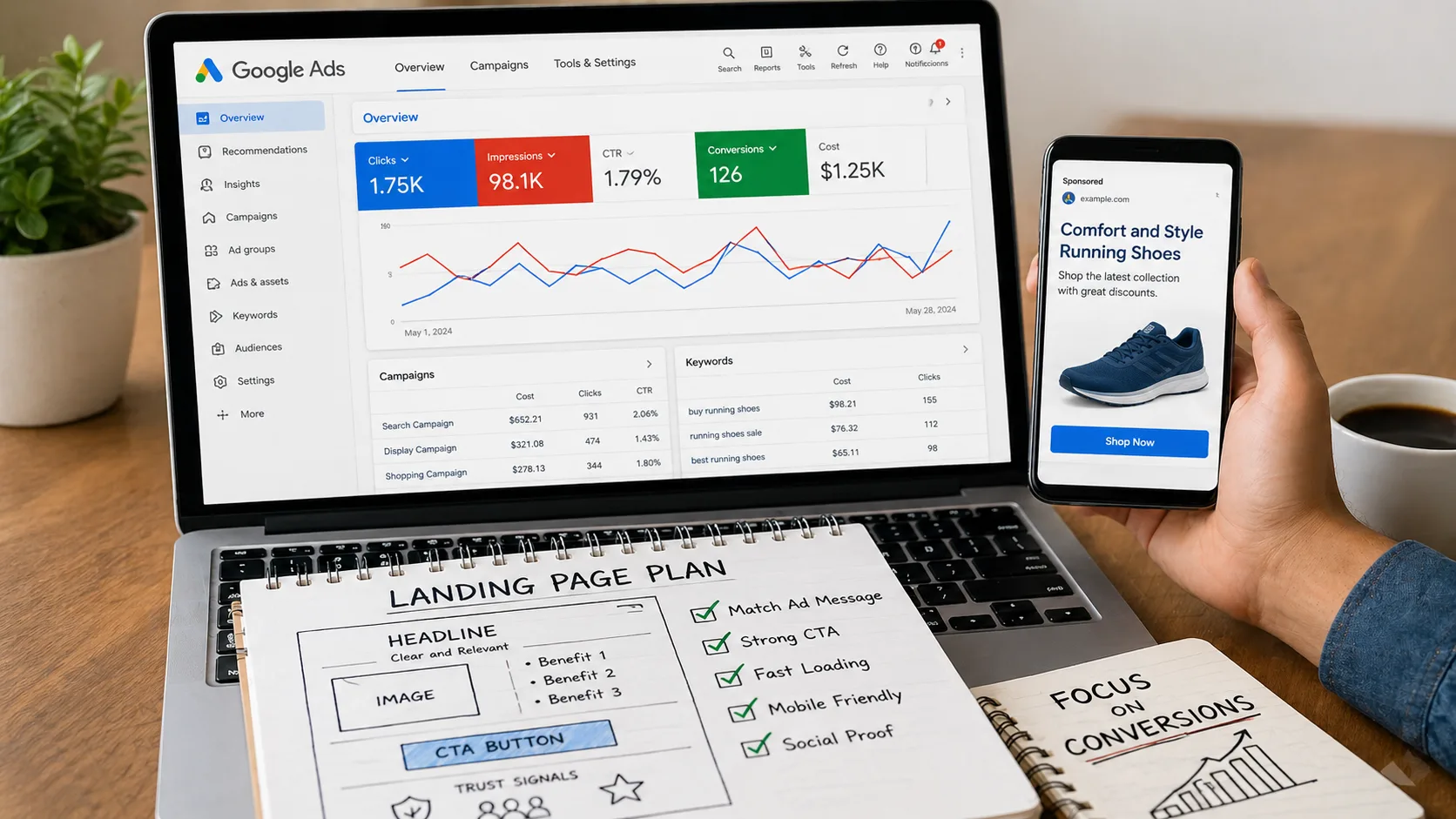
Creating a Google Ads landing page requires more than just throwing content onto a page. The structure, messaging, and user experience all contribute to conversions. Below are the elements that are commonly found in landing pages that perform well.
Clear and Relevant Headline
Your headline is the first thing a visitor sees, and it must immediately communicate value. A clear, concise headline that aligns with your ad’s message ensures visitors know they are in the right place. For example, if your ad promises “Professional SEO Services in Mumbai,” the landing page headline should reiterate this benefit. By matching the ad and the headline, you reinforce trust and increase the likelihood of engagement. Including your keyword naturally in the headline, like Google Ads landing page examples, also helps with search relevance.
Strong Call-to-Action
The call-to-action (CTA) is the action you want your visitors to take. Whether it’s “Get a Free Quote,” “Sign Up Today,” or “Shop Now,” a strong CTA is clear, prominent, and compelling. A landing page without a focused CTA can confuse users, leading to lower conversion rates. Placing CTAs above the fold and repeating them where relevant encourages users to act without scrolling excessively. When designing your Google Ads landing page, every element should guide visitors toward this action.
Match Ad Message with Page Content
One of the biggest reasons visitors bounce is inconsistency between ad messaging and landing page content. If your ad promises “Affordable Web Design Services,” the landing page must clearly reflect affordability and design offerings. Users are more likely to convert when what they clicked matches what they see immediately. A well-aligned Google Ads landing page ensures that the traffic you pay for is more likely to engage and convert, which in turn improves quality score and lowers ad costs.
Simple and Focused Layout
A clean, uncluttered layout is critical. Visitors shouldn’t have to search for information or struggle to understand your offer. Too many images, excessive text, or multiple links can distract users from the main goal. A focused landing page guides the user naturally toward the CTA. Using whitespace effectively, placing important content strategically, and minimizing distractions are simple ways to make your Google Ads landing page more effective.
Trust Signals and Proof
Trust is a major factor in online conversions. Adding customer testimonials, reviews, awards, security badges, or recognizable client logos can reassure visitors that your business is credible. This reduces hesitation and increases the chances of action. Including social proof strategically on a Google Ads landing page shows that others have benefited from your service, making new visitors more comfortable to proceed.
Mobile-Friendly and Fast Loading
With the majority of internet users accessing websites on mobile devices, a Google Ads landing page must be fully responsive. Slow-loading pages frustrate users and increase bounce rates, negatively impacting campaign performance. Optimizing images, using fast hosting, and designing for mobile responsiveness ensures visitors have a smooth experience, keeping engagement high and conversions consistent.
Common Problems That Hurt Landing Page Performance
Even experienced advertisers sometimes overlook key issues on landing pages. Slow loading times, unclear CTAs, irrelevant content, and overwhelming design are common problems. Visitors who encounter these obstacles often leave immediately, wasting your ad spend. By addressing these issues, you improve the effectiveness of your Google Ads landing page, reducing bounce rates and improving conversion rates over time. Testing different layouts, content placements, and messaging can help identify what works best for your audience.
How to Test and Improve Your Landing Page
Continuous testing is vital to ensure your landing page remains effective. A/B testing different headlines, CTA text, images, and layouts allows you to see which variations drive better results. Additionally, using analytics and heatmaps helps you understand user behavior on the page. Are visitors scrolling? Are they clicking the CTA? Data-driven insights enable you to refine your Google Ads landing page, making it more aligned with user expectations and campaign goals.
Best Practices Across Different Campaign Goals
Landing pages vary depending on the goal of your campaign. For e-commerce ads, product pages should clearly display the product, pricing, and a prominent “Buy Now” button. Lead generation campaigns should have concise forms, compelling benefits, and minimal distractions. For local services, highlighting location-specific information, service areas, and contact methods can increase conversions. Tailoring your Google Ads landing page to the specific goal of your campaign ensures better results and higher engagement.
E-Commerce and Product Pages
Product-focused landing pages must provide clear information about the item, pricing, and purchase options. Including customer reviews, related products, and stock availability can influence buying decisions. Each element should lead users toward the purchase action seamlessly. A Google Ads landing page designed for e-commerce ensures that clicks from your ads are translated into sales efficiently.
Lead Generation and Form Pages
For campaigns aiming to capture leads, forms must be simple and straightforward. Ask only for essential information, provide clear benefits, and place the CTA in a visible location. Including compelling copy and visuals helps persuade visitors to fill out the form. Optimizing a Google Ads landing page for lead generation requires understanding your audience and removing any friction in the signup process.
Local Service Pages
Businesses targeting local customers need landing pages that communicate location relevance clearly. Include local keywords, maps, contact information, and service hours to help users trust that your service is nearby and accessible. A Google Ads landing page for local services can convert traffic efficiently by demonstrating immediate relevance and trustworthiness.
How Landing Page Quality Affects Ads
Google rewards ads that lead to high-quality landing pages. A well-structured, relevant page improves quality score, which can reduce cost per click and improve ad placement. Low-quality or irrelevant landing pages increase CPC and reduce overall ROI. By focusing on user experience, page relevance, and actionable content, advertisers can ensure their Google Ads landing page not only converts users but also helps campaigns perform better in Google’s algorithm.
You can also improve your campaign performance by understanding modern SEO practices and website optimization techniques. Learn more about digital marketing services and explore how optimized websites contribute to better advertising performance. Additionally, understanding Google Ads landing page experience can help advertisers improve conversions and quality scores effectively.
Conclusion
A Google Ads landing page is more than just a destination for clicks—it’s the bridge between your ads and conversions. Effective landing pages have clear headlines, strong CTAs, aligned messaging, clean layouts, trust signals, and fast, mobile-friendly performance. Avoid common pitfalls like irrelevant content, slow loading times, and cluttered design. Continuous testing and optimization across campaign goals—whether e-commerce, lead generation, or local services—ensures that your landing pages deliver maximum value.
By implementing these strategies, advertisers can turn paid clicks into meaningful actions, improve conversion rates, and enhance the overall performance of Google Ads campaigns. Every detail of your Google Ads landing page matters, from design to content to usability, and investing in quality ensures that your ad spend drives real results.
For businesses looking to improve their online presence, you can also explore Website Development Services and SEO Services to strengthen your digital marketing strategy.