
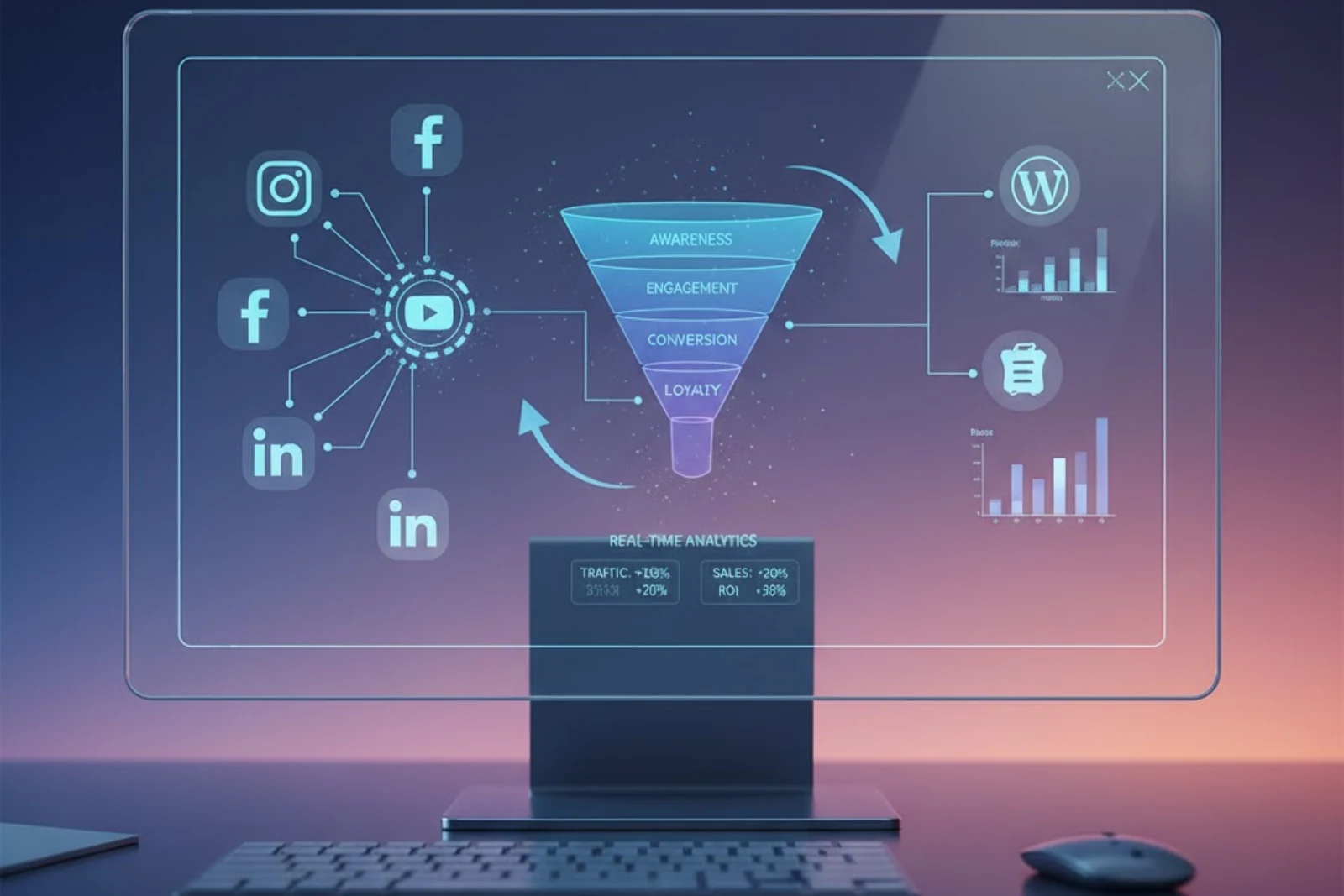
What Is a Full Funnel Strategy?
A full funnel strategy is the process of guiding a potential customer from discovering your brand to purchasing from you, and eventually returning again. What makes this strategy especially effective is the way it brings your website, social media marketing strategy, and social media ads together into a single connected system. Too often, brands treat their website and social platforms as separate efforts. When these channels operate as one, your content becomes stronger and conversions become smoother.
The full funnel strategy framework combines awareness, consideration, and conversion content. When people first encounter your brand on social media, they should be able to move effortlessly toward deeper information, and then toward an action such as contacting you, downloading something, or making a purchase. This unified structure becomes much more powerful when supported by strong WordPress website marketing or Shopify optimization.
Why Your WordPress or Shopify Website Is the Center of the Funnel
Your website—whether on WordPress or Shopify—is the destination where people evaluate your expertise, explore your services, browse your products, and finally take action. That’s why WordPress website marketing needs to be carefully aligned with your social media content. If your website loads slowly, lacks structure, or does not offer a clear next step, even the best social media marketing strategy cannot push people through the funnel.
You want your website to feel like a natural extension of your social presence. A visitor coming from a reel, a paid ad, or a shared post should feel as though the messaging and tone continues seamlessly on your landing page or blog. Fast loading, mobile-optimized design, clear calls-to-action, and thoughtful internal linking ensure that the funnel keeps moving. If you want to explore deeper internal optimization, you could check a dedicated page like /wordpress-optimization on your site (internal link placeholder).
How Blog Content Fuels Your Social Media Marketing Strategy
Blog content is often the strongest engine inside a full funnel strategy. Well-written blogs serve as educational assets that support your social media marketing strategy and give your audience a reason to spend more time with your brand. When blog posts address real questions or challenges your audience is facing, they become ideal resources to promote across Instagram, LinkedIn, Facebook, and YouTube.
A blog post can become a carousel, a reel script, a LinkedIn text post, and even short snippets for stories. This ongoing repurposing keeps your social channels active while reinforcing your message. Blog-to-social integration also strengthens your WordPress website marketing, because internal links within your articles keep users navigating your pages instead of leaving quickly.
Whenever possible, blog posts should naturally lead readers to related content, whether that’s a case study, a service page, or a beginner-friendly guide. This approach deepens trust and ensures your content plays a key role in the middle stage of your full funnel strategy.
The Role of Social Media Ads in Funnel Progression
While organic content helps with awareness and relationship building, social media ads accelerate your funnel dramatically. Paid campaigns can introduce your brand to new audiences, re-engage people who engaged with your content, and convert those who are already interested.
At the awareness stage, broad targeting helps introduce your brand message and drive traffic to your blog or landing pages. In the consideration stage, more specific audiences—such as those who watched your videos or visited certain pages—respond well to ads that highlight value, testimonials, or behind-the-scenes insights. Finally, retargeting ads help convert warm users by reminding them of products they viewed, blogs they read, or services they nearly signed up for.
Meta’s official documentation offers helpful insights on structuring these retargeting stages:
https://www.facebook.com/business/help
This balance of organic content and paid social media ads is essential to achieving smooth flow across the funnel.
Practical Mapping of Content to Funnel Stages
A successful full funnel strategy relies on publishing the right content at the right time. At the awareness stage, people are just discovering your brand, so educational and problem-focused content works best. This could be a simple blog explaining a trend, a reel introducing a concept, or a short guide shared through your social media marketing strategy.
In the consideration stage, users want more clarity. Here, deeper blogs, tutorials, case studies, and comparison posts help them decide whether you’re the right fit. When this content is linked properly across your website, it strengthens your WordPress website marketing.
At the conversion stage, users are ready for a specific action. Clear product pages, service pages, limited-time offers, or free consultation CTAs help finalize the decision. This stage benefits heavily from retargeting social media ads that encourage the final step.
Tracking and Measurement for Better Conversions
A strong funnel is only possible when you track user behavior effectively. Every link shared through your social media marketing strategy should include UTM parameters so you can see exactly which content brought people in. Your WordPress or Shopify site should also include essential tracking such as the Meta Pixel, TikTok Pixel, and GA4.
Analyzing user behavior helps you understand how visitors move from social media to your website, how they interact with your blogs, and where they drop off. Platforms like Google Analytics provide powerful insights on user flow and conversion behavior:
https://support.google.com/analytics
This data helps refine your full funnel strategy, allowing you to update your landing pages, adjust your messaging, or redesign your CTAs based on real user patterns.
Smart Linking, Structure, and UX for SEO
The structure of your content plays a major role in ranking and user experience. Internal links help users explore more pages and spend more time on your site, which strengthens WordPress website marketing. External DoFollow links add authority and credibility to your content.
Keeping paragraphs short improves readability, especially for mobile users who account for most social media traffic. Combining paragraphs with occasional supporting bullet points creates a natural flow without overwhelming the reader. Including a table of contents, visual elements, and consistent subheadings makes your content easier to navigate.
All of these structural improvements support your overall social media marketing strategy and complete your full funnel approach.
Conclusion
When your blog content, social media marketing strategy, social media ads, and WordPress website marketing work together, your business becomes more discoverable, more trustworthy, and more effective at converting visitors. A powerful full funnel strategy doesn’t rely on complicated tools or overwhelming tactics—it relies on consistency, clarity, and connected experiences.
Your website becomes the home base, and your social channels become the pathways that lead people there. With tracking, storytelling, and optimized user experience, your funnel can bring in higher-quality leads, stronger engagement, and better long-term returns.