
Introduction
Portfolio websites have become one of the most powerful digital assets for agencies, freelancers, and service-based businesses. In 2025, users no longer judge a brand only by its work but by how clearly, quickly, and confidently that work is presented online.
A strong portfolio website communicates professionalism, builds trust, and guides visitors toward action. Businesses investing in responsive WordPress design and modern web design are seeing higher engagement, better conversions, and stronger brand recall. This shift highlights why keeping up with evolving design trends is essential rather than optional.
This blog explores how portfolio websites are transforming in 2025 and how thoughtful design choices can directly impact credibility and growth.
Clean and Purpose-Driven Design Experiences
Simplicity continues to shape successful portfolio websites, but it is no longer about empty space alone. Clean design in 2025 is intentional. Every section serves a purpose, guiding visitors smoothly from introduction to conversion.
Well-structured layouts reduce distractions and help users focus on what truly matters—your work, your expertise, and your value proposition. Clean design also improves readability and performance, making it easier for visitors to stay longer and explore more pages.
This approach naturally supports responsive WordPress design, ensuring layouts adapt seamlessly across devices without losing clarity or balance.
Typography That Builds Brand Authority
Typography plays a quiet yet powerful role in modern web design. In portfolio websites, fonts communicate tone, confidence, and credibility before a visitor even reads the content.
Strong headings help capture attention, while balanced line spacing and readable font sizes improve user comfort. Many brands now use custom or premium fonts to establish a distinct identity that feels professional and memorable.
Rather than overwhelming users, effective typography subtly guides them through the content and reinforces brand personality.
Natural Interactions That Enhance Engagement
Interactive elements have matured into subtle experience enhancers. Instead of heavy animations, portfolio websites now rely on smooth transitions, hover effects, and scroll-based movements that feel intuitive.
These interactions help users understand where to click and how to navigate without instruction. When done thoughtfully, they increase engagement while preserving speed and accessibility.
Within responsive WordPress design, these interactions remain consistent across screen sizes, creating a cohesive experience for all users.
Dark Mode as a User-Centric Design Choice
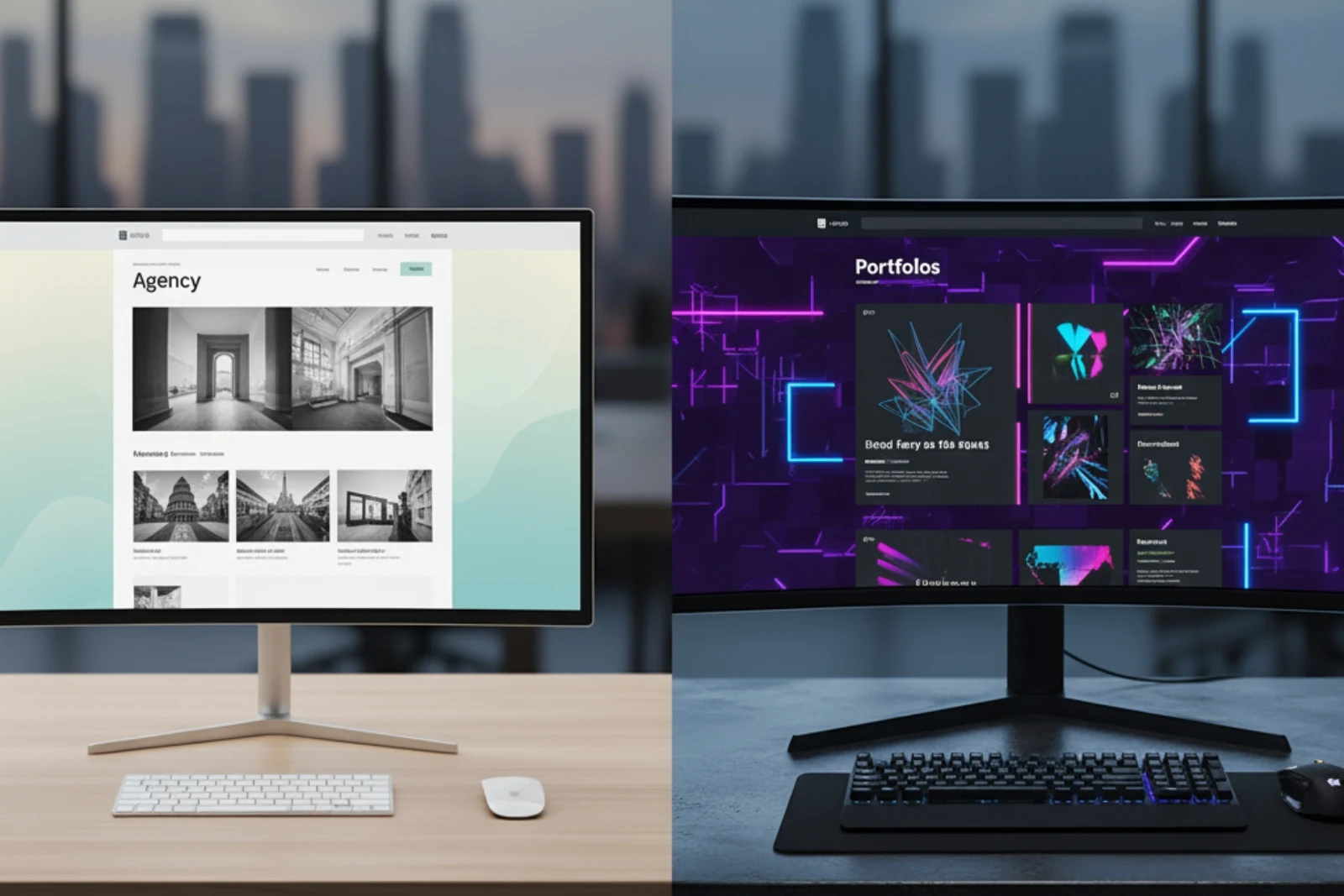
Dark mode has evolved into a functional design feature rather than a visual trend. Many portfolio websites now offer both light and dark viewing options to accommodate user preferences.
Dark mode reduces eye strain, enhances contrast for visual content, and adds a refined, modern aesthetic. It works especially well for creative professionals and agencies showcasing visuals, videos, or illustrations.
Offering theme flexibility reflects attention to user comfort and modern usability standards.
Mobile-First Design for Real User Behaviour
Mobile-first design is no longer a recommendation—it is the foundation of effective portfolio websites. Most visitors now encounter brands through mobile devices, making first impressions happen on smaller screens.
Mobile-first design prioritises clarity, fast loading, and touch-friendly navigation from the beginning. Content is structured to be easily scannable, while buttons and menus are optimised for thumb interaction.
Agencies specialising in responsive WordPress design ensure that mobile users receive the same high-quality experience as desktop visitors, without compromise.
Full-Screen Visual Storytelling
Visual storytelling remains a defining feature of successful portfolio websites. Large hero sections with high-quality images or videos immediately communicate creative capability and brand tone.
When paired with concise messaging and a clear call to action, full-screen visuals help visitors understand who you are and what you offer within seconds. This emotional connection plays a key role in building trust early in the user journey.
In modern web design, visuals are not decorative elements—they are strategic communication tools.
Custom Illustrations and Branded Graphics
Generic stock imagery is steadily being replaced by custom visuals. Portfolio websites in 2025 rely more on hand-drawn illustrations, branded icons, and tailored graphics to stand out.
Custom visuals add personality and authenticity while supporting storytelling. They help brands appear original and thoughtfully designed rather than templated or generic.
These design choices align perfectly with modern web design principles that prioritise originality and emotional connection.
Portfolio Showcases That Build Confidence
A portfolio section is the heart of any portfolio website. Instead of displaying work as static thumbnails, modern portfolios present projects as stories.
Well-crafted showcases explain the challenge, the approach, and the result. This helps visitors understand the thinking behind the work, not just the final output.
To improve clarity, limited bullet points may be used within case studies to highlight outcomes such as:
- Business goals achieved
- Measurable results
- Key solutions delivered
Used sparingly, these points enhance understanding without breaking the narrative flow.
AI-Enhanced Personalisation in WordPress
Artificial intelligence is quietly improving how portfolio websites interact with users. AI-powered chat support, smart content recommendations, and adaptive layouts help personalise the experience.
These features allow websites to respond to user behaviour in real time, offering relevant information without overwhelming visitors. When integrated properly, AI supports engagement while maintaining performance and simplicity.
Many WordPress tools now include AI features that work seamlessly within responsive WordPress design frameworks.
Performance and SEO as Design Foundations
Performance is inseparable from design. Even visually impressive portfolio websites fail if they load slowly or struggle to rank in search results.
Optimised images, clean code, proper heading structures, and secure hosting play a major role in user satisfaction and SEO visibility. Search engines reward websites that prioritise speed and usability.
Working with a reliable digital marketing agency Mumbai businesses trust can help ensure your portfolio website meets both performance and SEO standards.
Accessibility and Inclusive Design
Accessibility is now a core requirement of professional portfolio websites. Inclusive design ensures that users of all abilities can navigate and understand your content.
Readable contrast, keyboard navigation, and screen-reader-friendly layouts improve usability while supporting SEO. Accessibility also demonstrates social responsibility and strengthens brand credibility.
Inclusive websites naturally reach wider audiences and deliver better user experiences overall.
Internal Linking and Content Flow
Internal linking helps users explore related content while improving SEO structure. Thoughtful links between blogs, service pages, and portfolio sections guide visitors deeper into your website.
This approach supports modern web design by creating smooth content journeys rather than isolated pages.
Conclusion
The most effective portfolio websites in 2025 are built on clarity, performance, and user-focused design. By embracing responsive WordPress design and modern web design, brands can create digital experiences that build trust and drive long-term growth.
A portfolio website is no longer just a showcase—it is a strategic business tool. When designed thoughtfully, it communicates value, strengthens credibility, and converts visitors into loyal clients.